
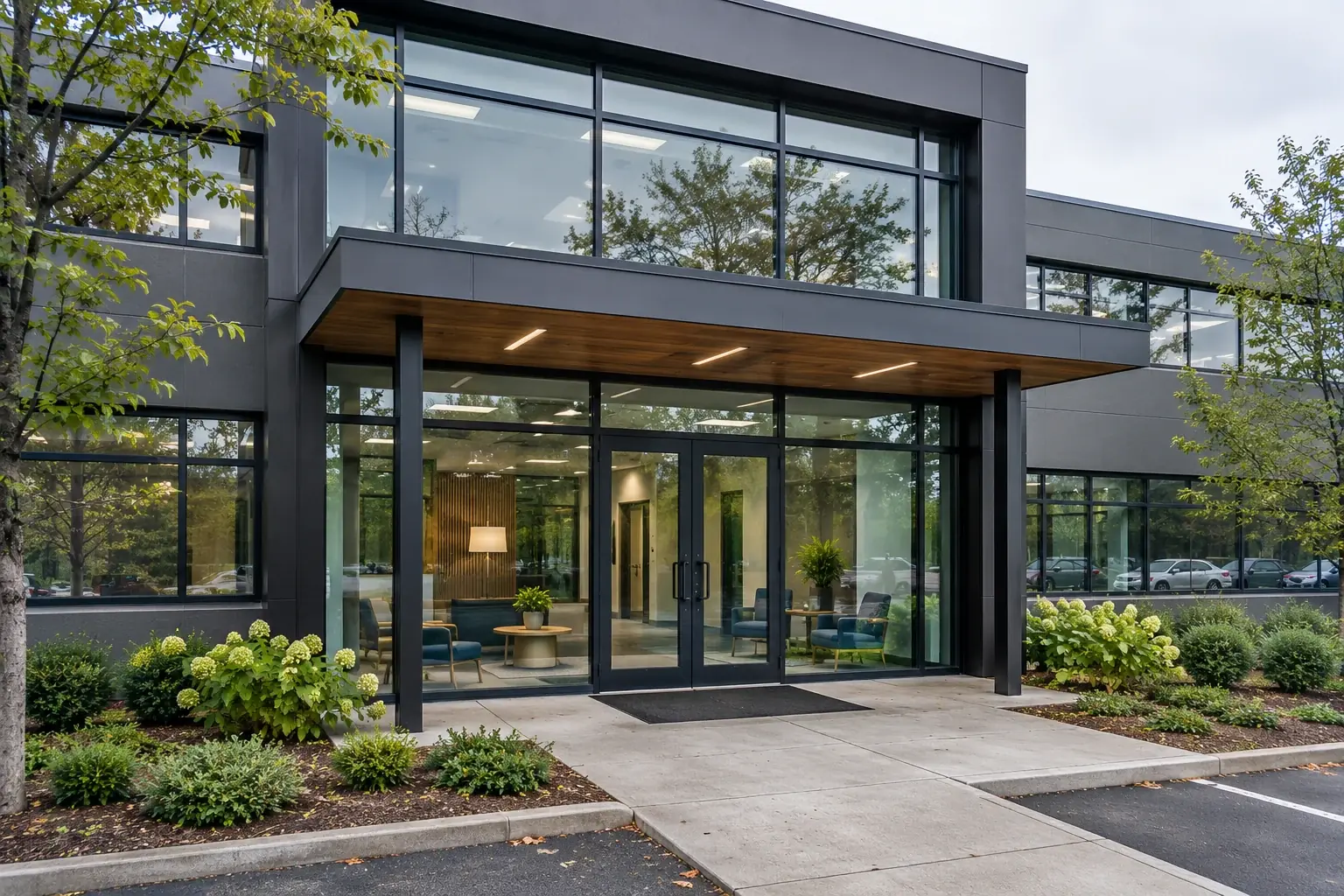
Office Cleaning by Workplace Type
Loop Office Cleaning cleans private offices, shared workplaces, and administrative areas in larger facilities.
Private suites and professional offices
We clean workstations and meeting rooms in law, consulting, financial, and other professional offices. Papers and personal property stay exactly where your team leaves them.
Multi-tenant buildings and office campuses
Keep tenant suites, shared lobbies, and restrooms clean with recurring service across your office buildings.
Coworking and flexible workplaces
Shared desks and booked meeting rooms need cleaning alongside kitchens and lounges. A day porter provides attention to common amenities while members use the space.
Technology workplaces
Technology offices mix hot desks, huddle rooms and busy kitchens, and hybrid schedules make some days full and others quiet. We clean the shared desks and conference rooms, keep the kitchen and restrooms on every visit, and weight the schedule toward the days teams come in.
Administrative rooms in other organizations
We clean administrative offices in healthcare, government, education, and industrial properties, including reception areas, meeting rooms, and staff spaces.
Matching the plan to the workplace
A law office, a coworking floor and the administrative offices of a healthcare organization all share the basics: desks, meeting rooms, restrooms and a kitchen. What changes is how often each room is used and who sees it. The plan follows those differences rather than a fixed template.
Technology offices in San Jose, research campuses in South San Francisco and administrative workplaces in Sacramento show how the same services adapt from one setting to another. In every case, shared lobbies and corridors can be added alongside private suites.
Life-science and research campuses
Research campuses in South San Francisco and Palo Alto pair lab space with substantial office space. Loop cleans the workplace side: reception and sign-in areas, meeting rooms, open-plan desks and the kitchens and restrooms staff share. Lab suites and controlled rooms can join the same plan through laboratory and cleanroom cleaning, worked from the campus’s written procedure.
Campus offices host a steady stream of visitors from outside the company, so lobby glass and the reception counter receive attention on every visit, while quieter upper floors follow a lighter routine.
Government and civic offices
Sacramento’s state and government offices and Oakland’s civic buildings receive members of the public all day. Front counters, waiting chairs and the restrooms near public entrances wear quickly, while the staff offices behind them see steady but lighter use. The plan gives each side its own list and frequency.
These buildings often have shared corridors and elevator lobbies managed by the property. Loop can clean those for the property through commercial cleaning, with each agency’s suite on its own schedule.
Distribution and manufacturing offices
Warehouses in Stockton and Hayward and manufacturing plants in Fremont keep administrative rooms close to the operation. Those offices need the same reception, desk and kitchen care as any workplace, plus extra attention on the entrance and corridor that connect to the working floor. The industrial cleaning page explains how those rooms are handled.
Healthcare, finance, labs and other workplaces
Healthcare workplaces follow their own protocol. Medical offices, dental offices and veterinary clinics are cleaned from reception to exam room in the order the practice sets, and rehab and treatment facilities get quiet visits booked around groups and meals.
In finance, bank and credit union branches get lobbies, teller lines and ATM vestibules cleaned after closing.
Labs and cleanrooms are cleaned to your written procedure, and data centers get escorted access, low-lint materials and raised-floor care, with their offices on the same plan.
For food and hospitality, food halls and food courts, shared commercial kitchens and ghost and cloud kitchens are reset between rushes and renter shifts, with deeper cleaning overnight.
Transport and utility sites keep offices next to the working floor. Airports, aircraft hangars and power plants get their offices, crew rooms, shops and break rooms cleaned around your shifts.
Property owners can put a whole site on one plan: multi-tenant buildings and business and office parks keep common areas and tenant suites under one contact.
Places open to members, students and shoppers get a schedule set around their hours, from coworking spaces, gyms and fitness centers and HOA clubhouses to colleges and universities, car dealerships and showrooms.
Industries
More industries
- Aircraft Hangars
- Airports
- Banks and Credit Unions
- Business and Office Parks
- Car Dealership Cleaning
- Colleges and Universities
- Shared Commercial Kitchens
- Coworking Spaces
- Data Centers
- Dental Offices
- Food Halls and Food Courts
- Ghost and Cloud Kitchens
- Gym and Fitness Center Cleaning
- HOA and Clubhouses
- Labs and Cleanrooms
- Multi-Tenant Buildings
- Power Plants
- Rehab and Treatment Facilities
- Showroom Cleaning
- Veterinary Clinics
A few useful answers
Frequently asked questions
Can individual suites and common areas share one cleaning service?
Yes. Each suite and each shared area gets its own task list under one schedule.
How are personal belongings treated in a coworking space?
Cleaning focuses on accessible room and desk surfaces while members’ belongings remain in place.
Can service cover offices in more than one campus building?
Yes. Each campus building gets its own room list and frequency.
Does an industrial office need warehouse floor cleaning to receive service?
No. Administrative interiors can receive office cleaning separately from the operating areas of the property.
What cleaning is available for a medical practice’s reception?
Medical office cleaning covers reception, waiting rooms, staff and administrative rooms, and exam rooms cleaned to the practice’s protocol.
Does a professional office need a different plan than a coworking space?
The services are the same, but room tasks and frequency follow how each workplace is used, so the plans differ.
Does a government office need a different schedule from a law firm?
Usually, because a public counter sees far more traffic than a private reception room. The front counter and nearby restrooms get more frequent attention, while back offices follow a lighter routine.
How do research campus offices differ from a downtown suite?
Campus offices spread across several buildings and host frequent visitors, so lobbies and meeting rooms carry more of the schedule than in a single downtown suite.
Resources