
Industries
Airport Cleaning for Offices, Crew Rooms and Terminal Restrooms
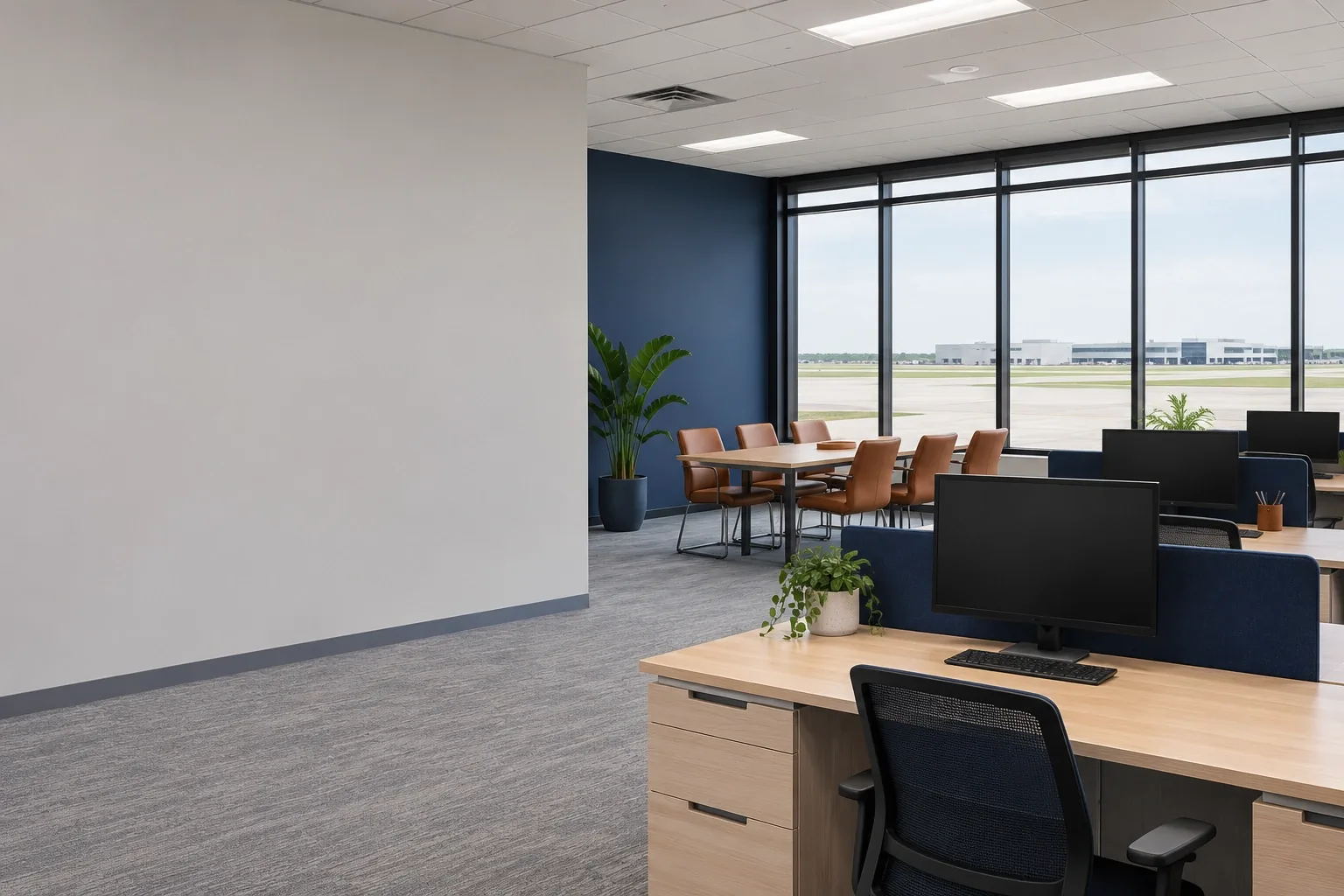
Loop Office Cleaning cleans the workplaces inside an airport: administration suites, airline and tenant offices, operations rooms, crew and employee break rooms, restrooms and cargo offices, with porter rounds in busy terminal restrooms, all inside the airport operator’s security rules.
The offices that keep an airport moving
An airport is full of ordinary workplaces: the administration suite, airline and tenant offices, dispatch and operations rooms, employee break rooms, crew rooms, and the offices inside cargo and support buildings. Loop Office Cleaning keeps those rooms clean on a fixed schedule, and adds day porter rounds for terminal restrooms and seating areas that need attention during the day. The airport operator’s security program decides where and when our crews may work.
The work is built for airport office managers, terminal tenants and airport facility teams. Desks, meeting rooms, kitchens and restrooms follow the same plan as our office cleaning, set around shift changes rather than a nine-to-five day.
Airports near Loop’s service area
Loop serves workplaces in San Francisco, South San Francisco, Oakland, San Jose, Sacramento and Stockton. The FAA’s commercial service airport list for calendar year 2024 (dated 9/15/2025) shows these airports in or near those cities.
| Airport (FAA listing name) | FAA hub class | CY2024 enplanements |
|---|---|---|
| San Francisco International | Large hub | 25,078,968 |
| Sacramento International | Medium hub | 6,679,426 |
| Norman Y Mineta San Jose International | Medium hub | 5,822,019 |
| Oakland San Francisco Bay | Medium hub | 5,292,736 |
| Stockton Metro | Nonhub primary | 63,668 |
By our estimate from that FAA data, the three Bay Area airports together recorded about 36.2 million enplanements in 2024. Around each terminal sit offices, crew rooms and support buildings that need the same steady care as any workplace.
How an airport’s security program shapes cleaning
Airports that serve airlines with TSA security programs operate under TSA’s airport security rules, 49 CFR part 1542, as of November 2026. Each airport’s own security program draws the lines for its secured area, its air operations area (AOA), its security identification display area (SIDA) and its sterile area, so the boundaries differ from one airport to the next. The airport also names one or more Airport Security Coordinators.
Before anyone gets unescorted access to a SIDA, the airport operator must confirm a fingerprint-based criminal history records check and training under a TSA-approved curriculum. Those decisions belong to the airport. Loop puts crew names forward early, and the airport or the tenant sponsoring the work decides who is badged, who is escorted and which rooms are open to them. Every Loop cleaner is background-checked before being put forward.
Badges in view, escorts close by
Inside a secured area or SIDA, the rule is simple: either your airport ID is displayed on your outermost garment above the waist, or you are under escort. An escort must be someone with unescorted access authority, and the person escorted is accompanied or watched closely enough to see if they stray from the purpose of the visit. Federal rules also bar anyone from getting around an airport security measure or using an ID other than as issued.
For a cleaning plan, that sets the pace. Escorted visits are booked with a named escort and a fixed window, and badged crews work the rooms their badge covers. Doors that should stay shut stay shut behind every cart.
Trash that never reaches the ramp
The FAA defines foreign object debris (FOD) as any object in the wrong place in the airport environment that could injure workers or damage aircraft. Its FOD advisory circular, AC 150/5210-24A (February 2024), is guidance and not regulation, yet it asks everyone with AOA access to understand their part in prevention, naming cabin cleaning, waste disposal and other contractors. Paper, plastic, cans, luggage tags and catering supplies are on its list of typical FOD, and wind can carry light debris onto the airfield.
Crews tie off liners, keep bins lidded and move waste only along the route the airport sets. The circular also says agreements between carriers and their support organizations should state which party cleans which areas, so Loop puts that split in writing before the first visit.
Restrooms and accessible features ready for every traveler
ADA rules require public entities and public accommodations to keep accessible features in working order, with short interruptions for maintenance allowed. Terminal facilities at commercial service airports that receive DOT financial assistance must be usable by people with disabilities, and airports with 10,000 or more annual enplanements must provide a wheelchair-accessible service animal relief area in each terminal.
In practice, crews park carts and wet-floor signs out of accessible routes and stalls, keep every dispenser stocked, and finish accessible stalls quickly so they reopen fast. Restroom deep cleaning can be added on a weekly, monthly or quarterly cycle, and janitorial supplies can come from Loop.
Shifts, flight banks and night visits
Airline and tenant offices are usually cleaned when their staff are thinnest on the ground, while terminal restrooms near busy gates benefit from porter rounds timed to departure and arrival peaks. Supervisors carry out quality inspections against the room list, and Loop holds insurance and a bond, covers its crews with workers’ compensation, and sends every client a certificate of insurance.
Hangar offices and crew lounges on the airfield are covered on our aircraft hangar cleaning page, and secured technical sites on our data center cleaning page.
Request an airport cleaning quote
Share the rooms, the buildings and the access steps your airport requires. A walkthrough with your office or facility lead sets the room list, the visit windows and a written quote. Ask for an airport cleaning quote.
A few useful answers
Common questions
Who decides whether a Loop cleaner can work without an escort?
The airport operator does. Its security program, background check and training process decide who gets unescorted access and where.
Which airport rooms does Loop usually clean?
Administration suites, airline and tenant offices, operations rooms, crew and break rooms, restrooms and cargo-building offices, plus porter rounds in terminal restrooms.
How is waste handled near doors to the ramp?
Liners are tied off, bins stay lidded, and waste moves only along the route the airport sets, so nothing light blows onto the airfield.
Can cleaning happen while a terminal restroom stays in use?
Yes. Crews clean one section at a time with signs placed outside accessible routes, so most of the room stays open.
Can a crew room be cleaned between shift changes?
Yes. Visits are set for the gap between crews, with tables, counters, appliances and restrooms finished before the next shift arrives.
Services