
Guide
How Warehouses and Plants Keep Breakrooms and Restrooms Ready for Every Shift
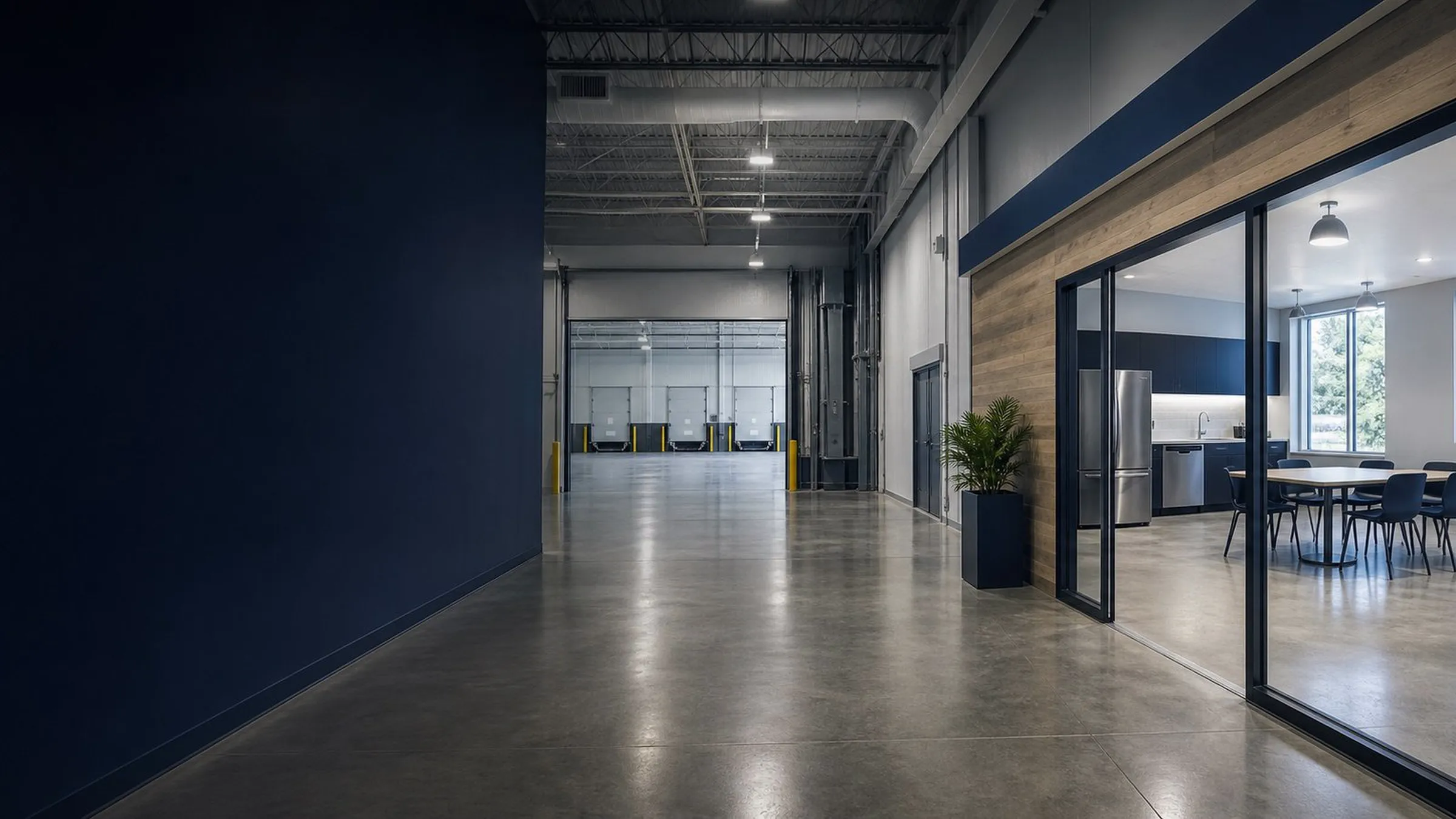
At a plant, warehouse or distribution center, the rooms staff share between tasks take their heaviest use at shift change. Here is how Loop plans cleaning for those rooms around the production calendar and the facility’s own rules.
Why shift change is the pressure point
A Stockton distribution center or a Fremont manufacturing plant gets busy in a different way from an office tower. Its staff rooms sit quiet for hours and then fill all at once, when one crew clocks out and the next one arrives. In that short stretch the breakroom microwave never stops, every restroom stall is in use, the locker area fills with bags and boots, and the corridor between the floor and the time clock carries the heaviest foot traffic of the day.
That rhythm decides the cleaning plan. A support room cleaned an hour before the handover looks fine to the outgoing crew and tired to the incoming one. Putting the work on the right side of each handover is what keeps those rooms usable for both crews.
The rooms this guide covers, all part of industrial cleaning, sit on the staff side of the property: administrative offices, the breakroom, staff restrooms, locker or changing areas, and the corridors linking them to the working floor. Production floors and lines can join the same plan, each on its own task list.
Mapping the support rooms before the first visit
Every quote starts with an on-site walkthrough, and at a working facility that walk follows the route a floor worker takes: in from the parking lot, past the time clock, into the locker room, by the breakroom and restrooms, and out through the door to the floor. Walking the route in person shows where soil enters and which rooms take the most wear.
The walk also records the facility’s own protocols. A site may set rules about which doors stay closed, where outside crews may walk, what protective gear is worn past a marked line and how visitors sign in. The cleaning plan is built around those rules, so the crew works the support rooms the way the site already expects.
Bring the shift schedule, the dates of any planned shutdowns and a note on the doors staff use between the floor and the office. Those details set the visit windows more than square footage ever does.
Timing visits around the handover
The simplest pattern is one full visit in the longest gap the operation has, usually after the last administrative staff leave or during the quietest shift. That visit covers the whole list: office desks and meeting tables, breakroom counters and sinks, restroom fixtures, waste collection, supply restocking and the floors in every support room.
Operations running continuous shifts have a short gap or none at all. There, rooms are cleaned in sequence while the floor crew is working, so the breakroom is finished before the next break begins and the restrooms are done before the handover rather than in the middle of it.
A day porter during the shift fills the time between those visits. Porter rounds timed near shift change, a pattern explained in choosing between daytime porters and nightly janitorial, catch the restroom that ran out of paper towels and the breakroom table covered in crumbs, so the incoming crew starts its shift in rooms that feel looked after.
Controlling what the floor tracks in
Soil from the working floor travels on boots, carts and pallet jacks. Entrance mats, the main corridor and the locker area take the first load, and whatever stays there reaches the breakroom and the office within a day. Steady cleaning along that path does more to protect the administrative rooms than any amount of extra dusting inside them.
Corridor and breakroom floors in these buildings are usually resilient flooring that wears fast under work boots. Routine cleaning lifts the daily grit, scrubbing and recoating renew a dulled finish, and full stripping and waxing restores it once the traffic lanes wear through. Carpeted offices near the front are vacuumed on every visit.
Locker and changing areas need their own attention: benches, the floor beneath them and the waste that piles up at the end of each shift. Lockers and the belongings inside them are left as staff keep them, and the cleaning covers the open surfaces around them.
Using shutdowns for the bigger work
Planned shutdowns, inventory counts and holiday closures are the best time for work that needs a room empty. Stripping and waxing a staff corridor, extracting office carpet or deep cleaning a breakroom all move faster when nobody needs to pass through, and a new floor finish gets the time it needs to cure before traffic returns.
Putting those dates on the same calendar as the recurring visits, through recurring janitorial services, keeps periodic work off shipping days and production peaks. When the shutdown calendar shifts, the floor work shifts with it.
Facilities in Stockton, Hayward and Fremont can combine all three patterns: steady care for the office side after hours, porter rounds during long shifts, and floor projects saved for the next scheduled shutdown.
A few useful answers
Quick answers.
When should a breakroom be cleaned at a facility running two shifts?
Before the busier break rather than after it. Cleaning while the floor crew is working leaves the room fresh for the moment they walk in.
Will the cleaning crew follow our sign-in and safety rules?
Yes. The walkthrough records the site’s sign-in steps, closed doors and protective gear rules, and every visit follows them.
How do we know when a staff corridor needs stripping and waxing?
When the finish has worn through in the traffic lanes and recoating no longer brings it back. The work is then held for a shutdown or a weekend so the finish can cure.
What happens to items left in lockers or on benches?
They stay exactly where staff left them. The crew cleans the open surfaces, floors and waste around the lockers.
Resources
Related guides
Services